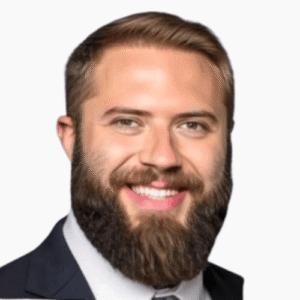
Noam Katz
Director, ML & ISR Site Lead Insitro
Noam Katz is Director of Antibody Discovery at Insitro, where he leads efforts to integrate machine learning with high-throughput experimentation for next-generation biologics design. He joined Insitro following the acquisition of CombinAble AI, where he served as Co-founder and CTO and led the development of multi-objective optimization frameworks for antibody engineering, combining machine learning, biology, and physics into a unified platform.
Earlier in his career, Noam held leadership roles in applied machine learning across healthcare and national security, including VP of Machine Learning at Iluria and Head of ML Research in Israeli intelligence units. He holds multiple advanced degrees across data science, electrical engineering, physics, economics, and law, reflecting a deeply interdisciplinary approach to solving complex biological problems.
Seminars
To kick off, this industry leaders panel will discuss the computational x AI x biologics industry collaborations and advancements shaping the space over the last year, key challenges to be overcome, and identify the biggest opportunities based on industry trends.
- Taking a strategic SWOT analysis approach, what are the strengths, weaknesses, opportunities and threats to AI/ML-derived biologics?
- What advancements in AI/ML and computational tool convergence should we be most excited about when it comes to biologics design and optimization?
- What are the technical or scientific bottlenecks that are slowing down computational x AI x biologics design and optimization?
- Reflecting on the last year, what have been some of the most exciting industry collaborations that have given momentum to the computational x AI x biologics space?
- What can we learn from these collaborations in terms of where the space is heading?
AI/ML adoption in biologics discovery is often constrained not by model capability, but by fragmented data, inconsistent experimental protocols, and limited interoperability across discovery workflows. This workshop focuses on the data, workflow, and operational data foundations required to deploy AI meaningfully and at scale across protein‑based discovery campaigns.
Participants will explore:
- Strategies for generating, capturing, and standardizing diverse experimental datasets to support AI‑ready biologics discovery, including how to leverage and derisk historical datasets
- How to benchmark biologics data maturity against small molecule discovery – which lessons translate, and which do not?
- What it takes to digitalize discovery workflows, including: NGS data alignment to antibody CDRs, epitope discovery and sequence diversification, library analysis and assay‑spanning data integration
- Implementing harmonized experimental protocols and metadata standards to enable robust AI/ML training and validation
- Integrating in silico tools with conventional computational methods and wet‑lab validation through human‑in‑the‑loop QA/QC
- Best practices for scaling AI/ML workflows across the enterprise, including: MLOps and dataset versioning, bias detection and mitigation, AI/ML model generalizability across discovery campaigns
- Emerging federated learning and consortium‑led approaches (e.g. FAITE) to address data scarcity, heterogeneity, and inter‑lab/inter-protocol variability
- Closed loop to static screening: Antibody discovery becomes dramatically more efficient when HTx data and ML are integrated into an iterative, learning system, not a one-off screening pipeline
- Multi-objective is the real bottleneck: Optimizing affinity alone is solved; the challenge (and opportunity) is balancing affinity, specificity, and developability simultaneously, and this requires new modeling and data strategies
- Data quality beats model complexity: The biggest gains come from designing the right experiments (diverse, informative, comparable), not from using more complex ML models