Hey Frank, you’ve built your career at the intersection of computational biology, AI-driven protein design, and scalable platform development. From your experience working across these different domains, how do you assess the state of the AI-driven biologics discovery field?
We have gone from having one grand challenge, protein folding, to having a whole host of smaller but interrelated desiderata around function, developability, and generally engineering optimal drug profiles into molecules de novo. There is a new demand for pharmacologically perfect molecules that has driven a general push toward modularity, adaptability, and exploration of new regions of sequence space to meet these evolving needs and accelerate development. I foresee an increasing emphasis on systematization to facilitate the adaptation of extant tool sets to new indications and modalities, as well as widespread usage of agentic tools to assemble model sets ad hoc.
How have you seen computational and AI approaches for biologics drug discovery evolve since your first involvement in the field, and what have been the key milestones along the way?
When I started designing proteins, the prevailing wisdom was that protein design was limited to native scaffolds, then native-like scaffolds. AI tools for protein design changed that, but the original tools kept a focus on structural canonicity; we have seen the set of designable topologies and features expand dramatically over time. Diffusion certainly accelerated this dramatically, and inpainting has made it possible to design localized features in context. We continue to approach a paradigm wherein better understanding of the segmentation of the problem allows for facile multiparameter optimization.

Frank Teets,
Head, Computational Science
AI Proteins
Your team at AI Proteins is building a closed-loop discovery platform that combines generative design with high-throughput experimental validation and iterative learning to create miniproteins. What are the biggest challenges in traditional biologics discovery workflows that your team is aiming to overcome with this approach?
Our miniproteins are a fundamentally different modality to both conventional biologics and peptides, and fully leveraging our unprecedented control over the entire sequence means every optimization process has to run at scale to capture all the available information required for rapid optimization. This means we can efficiently address sequence liabilities, adapt molecules to specific purposes, and skip a lot of the iteration that would normally be needed to accommodate significant sequence changes while still maintaining sufficient generality to facilitate transfer learning and broad advancements in modeling capability.
You will be co-delivering a workshop at the CDD & AI for Biologics Summit this year, focused on Deep Diving into Data Readiness for AI-Enabled Biologic Therapeutics Design: From Data Foundations to Scalable AI‑Integrated Discovery Workflows. Could you provide us a sneak preview of the perspective you’ll share at the workshop based on the work of AI Proteins?
My perspective is based on our experiences building our curated database, which combines a unique approach to automatic data gathering with expert curation of critical information. Everyone we approached told us that compliance would be a key issue; everyone wants analyses and insights, but nobody wants to do data entry. Our solution spans culture, interface, technology and workflow optimization, and I think we’ve demonstrated that all are integral to achieving a robust solution. The entire company builds our datasets and nobody feels like they do data entry.
Finally, going into the 11th CDD & AI for Biologics Summit, why are you excited to be involved in the meeting and what do you hope to achieve as part of this dedicated community?
I always look forward to the CDD & AI for Biologics Summit for the unique perspective on the practical aspects of implementation that threads through its talks. Making an AI model with an impressive hit rate is no longer sufficient, and this community understands that. I have thoroughly enjoyed the broad spectrum of perspectives from academia to pharma, as the community offers a cross-section of thought leadership across all aspects of the field and I always come away with new insights into the emerging challenges that lie between us and the clinic.
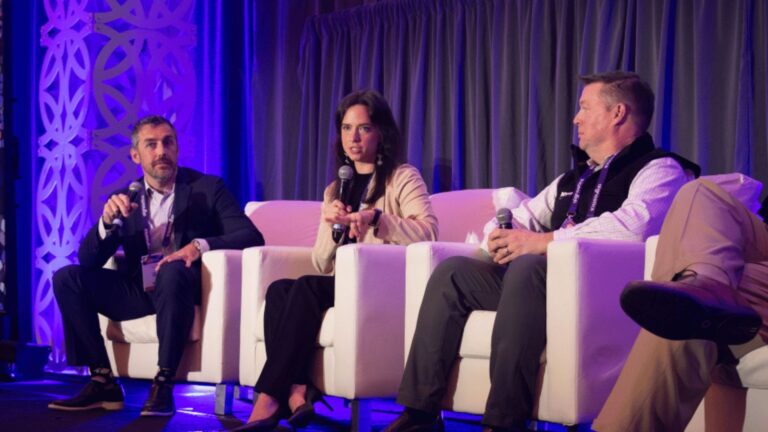
Discover the 2026 Agenda
Catch the latest industry breakthroughs, emerging trends and exclusive insights by participating in our dynamic roundtables and panel discussions.
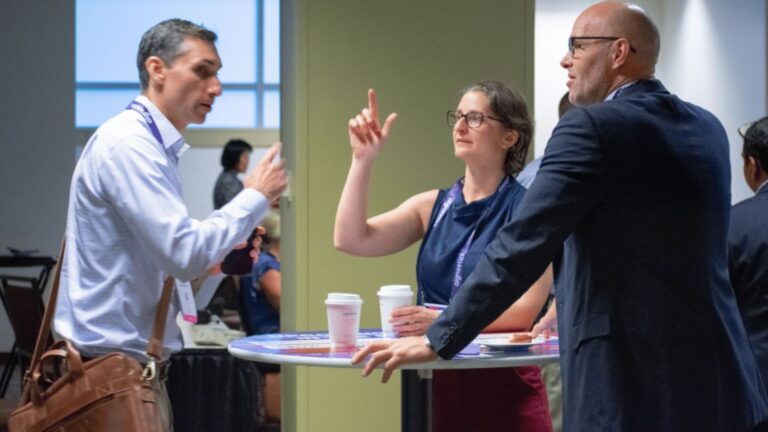
Prioritize Partnering With Us
As the field rapidly expands and matures, position yourself alongside leading solution providers to ensure your brand stands out as a premier choice, amid growing competition.
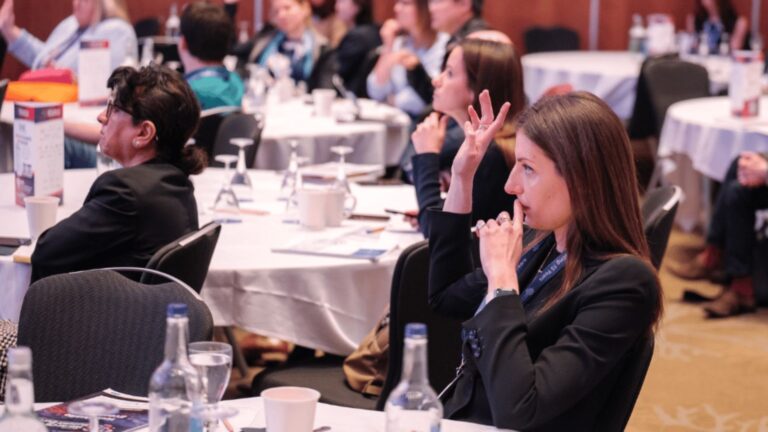
Join Your Community
Immerse yourself in critical conversations with like-minded experts spanning all stages of development, from in silico to de novo biologics design and developability optimization, and build invaluable connections.