Artificial intelligence is changing biologics discovery, but an AI model alone cannot deliver a successful therapeutic. Its value depends on the experimental data, computational infrastructure, screening technologies, molecular modeling, and developability evidence surrounding it.
For pharmaceutical, biotech, and techbio companies, the question is shifting from whether to use AI to how to integrate it effectively. This is creating demand for specialist partners across AI-enabled antibody discovery, high-throughput screening, molecular simulation, laboratory automation, research data management, and biologics developability assessment.
The goal is not simply to generate more candidates. It is to connect computational design with reliable wet-lab evidence so teams can prioritize biologics with the affinity, specificity, stability, solubility, and manufacturability required for further development.
High-Throughput Screening Is Powering Data-Driven Antibody Discovery
Modern antibody discovery increasingly combines high-throughput experimentation with machine learning. Instead of conducting a single screening campaign, discovery teams can create iterative Design-Make-Test-Analyze cycles in which models propose candidates, experiments test them, and the resulting data improves future predictions.
This creates an important role for antibody discovery CROs, assay developers, protein synthesis companies, sequencing providers, and high-throughput screening specialists.
However, generating more data is not enough. Experimental results must be consistent, well-annotated, and sufficiently diverse to reveal how molecular changes affect affinity, specificity, expression, stability, and other properties. The most valuable partners will therefore help clients generate the right data, not simply larger datasets.
Drug developers are also looking for integrated antibody discovery services that can connect antigen design, high-throughput screening, sequencing, antibody engineering, affinity maturation, and functional characterization. This becomes particularly important for complex formats such as bispecifics, multispecifics, T-cell engagers, antibody-drug conjugates, and VHHs.
Developability Assessment Is Moving Earlier
A biologic can demonstrate strong binding activity and still fail because of aggregation, low solubility, high viscosity, poor expression, instability, immunogenicity risk, or manufacturing difficulty.
As a result, biologics developability assessment is moving earlier in discovery. Rather than selecting candidates primarily for affinity and assessing other liabilities later, teams are incorporating developability into candidate design, screening, and optimization.
Modern approaches combine sequence analysis, structure prediction, machine learning, molecular dynamics, and high-throughput experimental assays. This can help identify liabilities such as aggregation risk, conformational instability, hydrophobic regions, oxidation, deamidation, and formulation sensitivity before significant resources are committed.
The strongest approach combines computational prediction with experimental validation. In silico assessment allows teams to evaluate more molecules quickly, while wet-lab characterization determines whether those predictions hold under relevant conditions.
For CROs, CDMOs, and developability specialists, this creates an opportunity to support clients earlier and build longer-term relationships extending from candidate selection into protein engineering, formulation, process development, and scale-up.
Molecular Simulation Must Capture Biologics in Motion
Predicted structures provide valuable information, but biologics do not remain static. Proteins move, fold, interact with their environments, and adopt different conformations. These behaviors affect binding, stability, aggregation, viscosity, and formulation performance.
Molecular dynamics simulations can help researchers examine conformational flexibility, structural stability, protein interactions, and binding interfaces that may not be visible from a single structure.
AI can accelerate parts of this process, but physics-based methods remain essential. Machine learning can recognize patterns across large datasets, while molecular dynamics and mechanistic modeling help explain why a molecule may behave in a particular way.
This is driving demand for platforms that combine AI, protein and antibody modeling, molecular simulation, and scalable compute infrastructure. To build confidence, providers must demonstrate that their methods are appropriate for large molecules, integrate with existing workflows, and generate interpretable findings that can be tested experimentally.
AI-Ready Data Is Becoming a Competitive Requirement
One of the biggest barriers to AI adoption in biologics discovery is the condition of the underlying data.
Experimental results are often distributed across electronic lab notebooks, LIMS platforms, instrument software, cloud environments, spreadsheets, local servers, and external partner systems. Different formats, naming conventions, assay definitions, and metadata can make this information difficult to combine and analyze.
For AI to deliver reliable results, data must be structured, consistently annotated, accessible, machine-readable, and reusable. If scientists must spend weeks cleaning and reconstructing experimental context, the speed advantage of AI quickly disappears.
This is expanding the role of ELN, LIMS, scientific data management, and cloud infrastructure providers. Drug developers need systems that can capture data at the point of experimentation, preserve its scientific context, connect with laboratory instruments, and make information available to computational teams without extensive manual reformatting.
The strongest platforms will improve interoperability rather than introduce another isolated data system.
Laboratory Automation Is Connecting Wet-Lab and Dry-Lab Teams
AI-enabled discovery becomes more valuable when computational predictions can be tested quickly and experimental findings can return directly to the model.
Laboratory automation provides the infrastructure needed to create this feedback loop. Integrated workflows can connect experimental design, robotic execution, instrument control, sample tracking, data acquisition, analysis, and model retraining.
Automation alone, however, does not make a laboratory AI-ready. Data generated by instruments must still be contextualized, standardized, and transferred into interoperable systems.
This creates opportunities for laboratory automation companies, instrument integration specialists, workflow orchestration platforms, cloud providers, and informatics vendors. Successful solutions will help teams increase experimental throughput and data consistency while maintaining traceability, flexibility, and scientific oversight.
What Biologics Companies Need From Technology Partners
As more companies enter the AI-enabled biologics market, broad claims about being “AI-powered” will offer limited differentiation.
Pharma and biotech teams need evidence that a solution can address the molecular complexity of antibodies and other protein therapeutics. Providers must clearly explain what data their models require, how predictions are benchmarked, where their methods are most reliable, and how results should be validated.
Integration and scientific support are equally important. A strong standalone platform provides limited value if it cannot connect with a client’s screening data, laboratory systems, molecular modeling environment, or experimental workflows.
The most effective technology partners will help clients connect AI, computational modeling, high-throughput experimentation, data management, and developability assessment into one practical discovery strategy.
Building a Connected Biologics Discovery Ecosystem
AI-enabled biologics discovery depends on more than isolated tools. Progress requires high-throughput screening, protein and antibody modeling, molecular simulation, AI-ready data management, laboratory automation, and developability assessment to work together across connected discovery workflows.
For solution and service providers, the opportunity lies in helping drug developers turn computational predictions into reproducible experimental data, better-informed candidate decisions, and biologics with a clearer path toward CMC development.
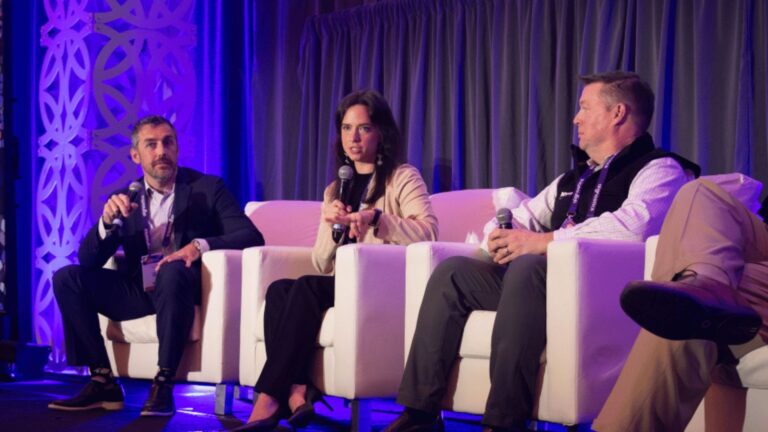
Discover the 2026 Agenda
Catch the latest industry breakthroughs, emerging trends and exclusive insights by participating in our dynamic roundtables and panel discussions.

Prioritize Partnering With Us
As the field rapidly expands and matures, position yourself alongside leading solution providers to ensure your brand stands out as a premier choice, amid growing competition.

Join Your Community
Immerse yourself in critical conversations with like-minded experts spanning all stages of development, from in silico to de novo biologics design and developability optimization, and build invaluable connections.